Showing posts with label Management and Governance. Show all posts

Saturday, March 14, 2015

This is how Metro Bus Project could be made a success in Pakistan even by spending less


The Lahore Metro bus project commenced with a big bang as after the demise of the Lahore Omni Bus Service (LOS), once the darling of Lahore's roads and transportation system, there has been no alternative to the LOS. Like many others, I also wanted to have a ride on the Lahore Metro to be part of this new era in Lahore's transportation means. 

So while I was visiting Lahore in 2013, I took my son along to Gajju Matta, the commencement point of 27 kilometres long route of the Lahore Metro, to board the bus and see 'how it felt' travelling into it. And I have already shared my experience in one of my earlier posts: Lahore Metro Bus Riders  I am sharing some of the photos I shared in me earlier post of Lahore Metro herein under:


Lahore Metro bus at a bus stop
At Shahdara/Rive Ravi, the Metro bus shares 'combined' road with other traffic


While the buses moved unhindered and with no traffic at all in the secured lanes, guarded by iron fence for which it is also sarcastically called 'Jangla Bus Service' by some, the people not travelling in the bus were seen having a rough time on intersections due to cramped space as most of the road space has been allocated exclusively for the Metro buses. Now a similar project is being undertaken in Rawalpindi/Islamabad - where instead of 'Jangla' an elevated platform has been constructed costing billions of rupees for the exclusive use of the Rawalpindi-Islamabad Metro. 


This is how Metro runs in Pakistan at a huge cost being paid by the tax payers of the country. In fact, the project has been undertaken for one route only at the expense of countless smaller projects in other parts of the province. But like most of the Pakistanis I also thought that perhaps this is how a modern transportation system works - till I visited Germany very recently.


In August last year, I went to Germany to visit my son who is studying in the Kiel University of Applied Sciences. And there I came to know how an efficient public transport system works - while using the existing road space with no exclusive lanes, corridors or overhead bridges.


Unlike most roads in the cities of Pakistan where there are usually more than two lanes for one way traffic, most roads and motorways in Germany, and even in Europe, are two lane roads. But despite their being only two lanes available for the traffic, the huge buses ply with much more ease than the 'exclusive and elaborate' arrangements as we see in Pakistan. The buses while use one of the lanes, the other lane is used by normal traffic - but the lane used by the buses is not bus-exclusive as normal traffic also uses the space as well. It is only near a bus stop that there is a bus exclusive right as it stops and takes/offloads passengers.


As can be seen above, the bus moves in a two-lane road along side the normal traffic

And the entire system is electronically manged, monitored and digital displays are at each bus stop to announce the arrival time of a particular bus number, as can be seen in the above photo. Not only this, on each bus stop, there are charts showing timings of the buses in three categories:
  • One for Monday to Friday, when the buses ply in full strength as these are the five working days of the week. 
  • The next column shows bus timings for Saturday with reduce number of buses as Saturday is closed holidays but markets are open. 
  • The third column shows bus timings for the Sunday with leas buses as all markets are closed and there is very thin bus passengers.
Bus timings schedule available at each bus stop - showing bus timings for Monday-Friday, Saturday and Sunday

And as if this is not all. The bus time table is also available as an App for the mobile phones and one can know while sitting in one's home/office as to when a particular number bus is to arrive at the nearest bus station and instead of wasting time in standing at the bus stop,

Screen shot of my mobile phone showing bus timings/scheduling app

One thus leaves one's home/office at the eleventh hour and the bus arrives right on dot. However, in case of any unprecedented delay, the cause of delay is displayed digitally on the digital board as shown in the photo above.


As can be seen in these photos (above and below) that buses are efficiently plying on two lane-roads with no hindrance to the other form of traffic.


The photos above and below show a classic example of buses using a single lane road inside a living residential area while cars are parked on the car-exclusive parking area.


And when inside the bus, there etiquette as there are separate seats for old people right behind the driver's cabin so that they do not have to walk more to find a seat. Likewise there is s special entrance for women carrying baby carts and the bus tilts to the right at the bus stop to allow carting the cart inside the bus. 

Watch the video below which I made while sitting in two inter-connected buses bus and see for yourself with how much ease the buses moves along with other traffic. However, buses and cycles take precedence over vehicles and all vehicle drivers respect the right of the public transportation system. And do not be amazed to see that the bus is being driven by a female driver: something which come as a big surprise for the section of women who want equal right to be given to the women in our country.


Having seen and being on board buses in Lahore and Germany, here is a brief analysis:

Pakistan:
  1. Unnecessary and colossal amount of money has been spent on exclusive roads/lanes and elevated platform for the buses rather than buying more buses and plying on more routes on existing roads
  2. Despite availability of generally more than two-lanes on roads, additional infrastructure has been developed rather than using one lane for the buses
  3. There is no management system using digital technology to control the buses and their timings
  4. A highly subsidized one-ticket for the entire length of the route is enforced, while government pays a much larger sum to compensate for the actual costs
  5. The system does not utilize the exiting wide roads of the city
  6. Since the system is only one-tracked, there are no connecting buses available and the commuters have to then travel in ordinary mini-buses and Suzuki vans for continuing with their journey to the destination
Germany:
  • The bus system is highly efficient and ensures in-time arrivals WITHOUT creating any additional infrastructure and by utilizing existing two-lane roads
  • The system is completely digitized with instant timings being displayed at bus stops and there never is a delay despite using existing road network
  • There are special seats reserved for the elderly/disabled and exclusive entrance for cart-wheeling baby carts and disabled people wheel chairs
  • There is no subsidy on fare. However, special discounts are available on buying monthly, weekly, daily or even hourly tickets
  • The usage of special App allows commuters to reach the bus stop minutes before the bus arrives
  • The exclusive app also allows planning one's movement by using inter-connected buses
  • The excellent inter-connectivity of the system allows getting on to the connecting bus to their destination
  • Each bus has its own computer-based ticketing system and internet-connectivity to relay its present position - which helps in predicting its  ETA (expected time of arrival) on the next bus station
  • Due to this efficient bus system, people leave their cars at home and prefer to travel in buses. This not only saves them from using cars that are uneconomical due to high fuel prices but also saving them for finding parking spaces which are difficult to find during office hours. And even if these are found, the parking fee is 10 times higher than the bus ticket
  • The availability of cheap and efficient bus service thus keeps the city roads less crowded as people prefer to use the buses rather than using their own cars
I only wish our leaders who spend colossal amount of tax payers of money and waste away on projects using no intellect to also move around and see how efficiently such systems work around the world. In fact rather than building exclusive lanes and bridges, which cost much more than the buses, the same money could be spent on buying more buses and installing an efficient computer based management system to provide better services to people rather than wasting money on one route only.

Originally published by me at JahoJalal

If you like the Fire Within, follow us on Facebook

Friday, December 17, 2010

Russians and Pakistanis sailing in similar boats

Don’t be amazed by my statement but believe me the state of affairs in both countries look so identical and similar that I was forced to caption my post like so. It was a small news report in the English daily that I read. Perched in a side column, it just caught my attention because of its caption: Questions that Putin did not answer. When I read the news, it looked as if the question were posed to the PM of Pakistan rather than one of the most powerful countries of the world.
 
Herein under are those questions that Putin did not answer during a phone-in session on the television, which went on for almost five hours. I will not comment on the questions. Rather I leave it to the acumen and perception of my readers to correlate these questions to our own political milieu and find similarities. 
  • When will we have true democracy?
  • When will we have freedom of expression and free elections?
  • When will the doctors stop taking bribes and kickbacks?
  • When will the law apply to officials and the rich?
  • When will we live well?
  • Will the chaos that reigns in Russia end one day?
  • When will you leave politics?
  • Do only those questions that are not annoying reach you?
  • And finally a classic question: When will a feudal system end in Russia?
Having read these questions, don’t we feel that we are also sailing in a similar boat as do the Russians?

Thursday, December 9, 2010

(Anti) Corruption Day Today

It may be not be very amusing, but while the world celebrates the Anti Corruption Day today, our government chooses not to for the last consecutive three years. Why? I do not need to elaborate. In Pakistan, during the Mush regime, the day was observed in collaboration with the Transparency International (TI) and the United Nations Office on Drugs and Crimes (UNODC) – something usually not expected from the dictators. But its non observance under a democratic rule is certainly objectionable and un-understandable.

The decision comes amid reports of large scale embezzlement and corruption in the provision of facilities to the Pakistani Hajj pilgrims during their stay Saudi Arabia and massive kickbacks and commissions feared to the tune of some Rs. 20 billion in award of contracts of some housing schemes. The excavations at Reko Diq in Balochistan, a haven of huge deposits of gold and other precious materials, is also making headlines these days as the contracts have been awarded with no regard to merit through open tenders.


The growing awareness to corrupt and the corruption is the hallmark of observing the 9th of December as the anti corruption day globally. While people only talked of corruption in hidden words some years ago, they are now more vocal and pointing fingers towards the corrupt. As a result, more and more politicians, head of the states and CEOs of major giants are being hauled and prosecuted on charges of corruption.

And rightly so, the observance of the day has its significance as the tax payers’ have every right to know where their hard earned tax money goes and today they vow not to let their taxes be embezzled or squandered which they give to their governments for the better being.

Pakistan is not faring very good on this account and non-observance of this day is of serious concern for every Pakistani. Rather such an act makes others more doubtful about our government’s acts and that’s why it suffers from the credibility issue. Had this not be the case, the world would have come forwards whole heartedly to help the flood victims, who continue to suffer and are braving the severe winters under the open sky for want of funds to construct shelter for them.

If you like the Fire Within, follow us on Facebook

Tuesday, November 23, 2010

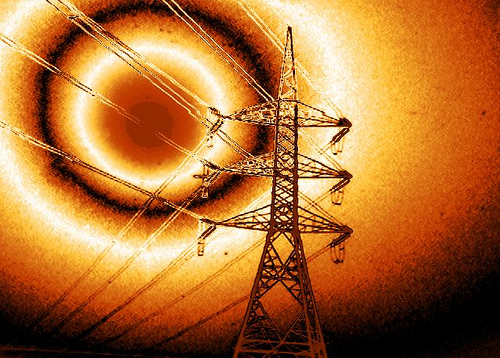
Power shortage and our future strategy

Photo Courtesy: Jalalspages


For quite some time now, we are living in dark ages. The term “shortfall” which was never heard before has been coined to explain the inability of the WAPDA to provide electricity to everyone. We have landed into troubled times because no one has ever devised a strategy to address our power requirements for the last so many years, rather decades. Except for “reaching a consensus” on the construction of the disputed Kala Bagh Dam, on which efforts to reach a consensus started in the early 50s, nothing much has been done to address the problem.

As of present, despite being a non oil producing country(though we proclaim so for a paltry few thousands of barrels per day as against millions by the actual oil producing countries), our major power generation reservoir comes from the thermal power generation capability, which is about 65% of the total capacity. This is followed by 33% from the hydroelectricity and a bare 2% from nuclear energy. Of the total installed capacity of 19,505 megawatts, we at best produce around 13,000-15,000 MW, while the remaining capacity remains unachieved due to many reasons. Thus we continue to face a “short fall” of some 4,000-5,000 MW.

Having said this, the present government has made “arrangements” through the RPPs and in this regard the world’s biggest power ship has arrived at Karachi which will provide us some 230 MW at Rs. 15.50 per unit as against the current cost of some nine rupees and a fraction. But like many other efforts, this is only as short term measure to ease the power shortage and is not a solution in the long term.

What about a power strategy for the future? Well there is nothing of such thing on the cards since each government that comes has a five years mandate (again a rhetoric frequently used to fool people) and makes cosmetic changes or initiate projects that could earn them instant recognition and popularity to win the next term. So why waste energies and tax the brain for evolving long term strategies.

Long time back, through a TV discussion I came to know that in our neighbouring India, they had imposed a ban on manufacturing electricity bulbs over 60 watts to conserve the electricity. In our case, one can see shops lit with 500 watts big bulbs, which have now been replaced to an extent by still bigger energy savers. The policy of limiting bulbs to 60 watts is in fact a long term strategy, which when implemented in a country of one billion people can tell the difference. I don’t think anyone would have ever thought of such a long term resolve to address the energy crisis.

We have yet to turn to the solar energy, which is abundantly available to us throughout the year. I was reading a report on internet that Morocco is investing in the field and plans to produce 2,000 MW. Now by doing so, Morocco would save 12 percent of its present oil imports, which would translate into a saving of $ 500-700 million annually. And that is not all. Morocco would also reduce the greenhouse emissions by 3.7 million tons of carbon dioxide.

Now the two examples of India and Morocco quoted above speak of long term planning, rather than short term goals, which speak of our inability to project our requirements in future and come up with solutions to provide a better living for the future generations, if not the present one.

Beside cheap alternatives (in the long term) like the solar and wind power, we have gigantic coal reserves which no one seems to be talking of. Even if there is a development on the subject, it is not likely to take off in at least next 5-10 years.

I think to start with duty free import of quality energy savers be allowed and the manufacture and use of ordinary bulbs and tube lights be banned. This would save us a sizeable quantity of electricity for use in our otherwise energy starved industry. The ordinary bulb manufacturers be encouraged to switch over to making energy savers through duty free import of new machinery.

Concurrently, the solar panels and the batteries should also be imported duty free and the facility made available to common citizens to lessen the burden on the national grid and present power generation capacity. At present, a solar power source for 5-6 bulbs and two fans costs around Rs. 300,000, this is colossal and cannot be afforded by ordinary people. A relief in this regard would also ease of the load on our power generation capacity.

There is also a lot of potential to produce electricity from our canals and other water courses on small scale. Small turbines can produce adequate electricity for villages in the vicinity at very cheaper rates.

It is time now that we should start to focus on long term projects that are cheaper and suit our environment. Our reliance on alternative energy sources, that is solar, wind and coal, would not only reduce per unit cost of electricity but would also reduce our oil import bill when our reliance on the thermal power generation would reduce.

But this would require a government of big heart and firmness to deal with such projects as the oil producing companies would never like to lose Pakistan as one of the biggest oil importing market in the world. So long we bow to these companies and keep getting blackmailed, a meaningful power strategy would never realize in Pakistan.

Friday, November 12, 2010

The Mismanagement of Pakistan Railway

Whenever Mr Bilour takes over the Railways, rather I should say “every time” Mr Bilour takes over the Pakistan Railway, it suddenly goes bankrupt, as if it wasn’t functioning at all previously. A few days ago, the honourable minister lamented, “We even do not fund to purchase bulbs for the trains.” This was followed by a news item that most of the engines were standing idle for want of spares, quoting the railway minister. It is amazing that while all trains run jam packed, the railway still run in losses. I would like to ask the minister what actions has he initiated for putting the railway back on track - ordering engines from a failed firm from China or something else? It hurts to see once very efficient organization become useless, inefficient, unyielding and dying.

I was once part of a study group on human resource development and management and we went to the Railway Headquarters in Lahore to get educated as to how they, the biggest non-army human resource intensive organization in Pakistan, were handling their HR effectively. And I and the remaining group were appalled to know that Pakistan Railway did not have a dedicated HR department. Now that is something very awesome and strange as such strategic organizations do not run on personal whims or past experiences. Like the airlines all over the world which have a pilot-crew-ground maintenance staff in a given ratio to each aircraft, the same ratio should also apply to the railway as well. Each train should have a ratio of drivers-guards-maintenance staff. Do we know this ratio or does the minister?

Recently, Pakistan Railway decided to cancel/suspend over 200 hundred trains for want of spares and shortage of funds. But what about the staff and manpower allocated for the suspended trains? Have those people been laid off or still getting salaries for doing nothing? A prudent minister should have ordered laying off the surplus/idle staff rather than lamenting the engines standing idle for want of spares. Even the services of these people were not utilized or offered to the Army and other agencies that were battling the recent flash floods and evacuating people. At least this idle work force should have been put to work rather than sitting idle.

The only time I remember that Pakistan Railway ever undertook a worthwhile modernization; it was during the “dictator” Ayub Khan’s time when the Lahore-Khanewal section was electrified to run electric trains. No government after the “dictator” could extend it to Karachi to save time and have faster trains service.

Even at this time, while most of the railways of the world are fuel, manpower and equipment efficient, our railways lacks any modern look. It works on the same vintage signal system, it is intensively manpower heavy which is a drag on the resources of the organization. Perhaps even the Railway itself would not know how many employees has it on its rolls or whether they are actually required or not.

Our railway does not computerized its ticketing system and no facility exists in this modern world within this giant organization to extend the facility of online ticketing to its passengers. Nor does it provide concessional packages for family travel or have a formula to apply on the fare during peak rush hours. Its platforms are the filthiest, infested with substandard cafes selling unhygienic foodstuff to passengers travelling in the trains. The trains are equally dirty despite the battalions of labourers and train staff to clean these and keep these so even during the travelling duration. One can still find cold drink sellers shabbily dressed carrying pales “balti” with ice and cold drinks and selling these onboard. It seems as if these trains are run by illiterates or by those who do not seem to have seen railways functioning around the world and how passengers enjoy a clean and hassle free journey abroad. We do not ask for bullet-trains in Pakistan, but at least these should be worth travelling.

I think time has come that affairs of failing and unproductive strategic assets like the Pakistan Railway, Pakistan Steel and PIA be handled professionally and instead of swarming these with unskilled workforce from political parties, a proper operation research be carried out to ascertain the actual requirement of the staff/workers/labourers and even management to operate these organizations effectively rather than pouring in money and still not yielding the desired effects, and make these parasites on national exchequer and tax payers money.

PS: This post was first published on Management Matters on 2nd Novemeber 2010

Twitter Delicious Facebook Digg Stumbleupon Favorites More