Showing posts with label Load Shedding. Show all posts

Monday, June 18, 2012

Inverter Generat(or)ion

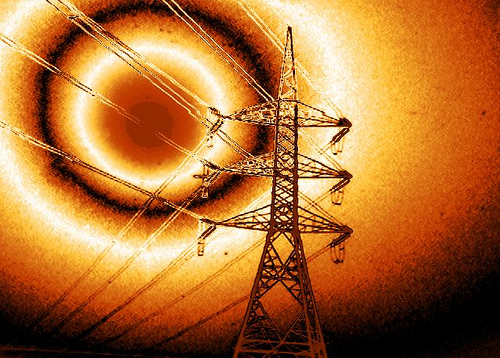
The long spells of load shedding - which are increasing by hours every day makes me wonder how long will this menace continue to haunt our lives.

Photograph by Jalal HB [Shared at Jalaspages / Flickr]

We grew up in days when such things were never heard of - we had plenty of everything, including electricity. Light offs were only heard in wars in the black out nights and there were never any log spells of power outages as we are witnessing today. Even such things were not there as long as three were people who could manage this country well as they loved it as their own too. 

But now it seems there are two kind of people in our country: 'People' who rule and people who are ruled. For the People who rule, there seems to be no limit to enjoy the perks and privileges at the expense of taxes paid by the People who pay and are still ruled. And this is very true when it comes to living as an ordinary human being. 

The long spells of power outages which now stretch to five to six hours at a stretch even in cities speak volumes of inefficiency of those who are mismanaging the the power sector in Pakistan. The power tariff has been raised something like 200% over the past couple of years, but still there is no relief to the people. every other day, the president and the prime minister 'take notice' of the long spells of load shedding, make statements to pledge to look into the matter - but the matter is so deep welled that it is taking much more than the required time to come up with a solution.

Load shedding has become so central to the miserable life of  the people that nothing else comes to mind while talking and writing about our grievances. When we were kids, we heard the world 'the generation gap.' But today it is the inverter generation that is cursing its life. From infants to old, students and labourers, everyone knows one world - load shedding and inverter (commonly called the UPS). From a generation gap we have become an inverter genear(or)ion or simply an inverter generation - a generation whose life now hinges more on inverters and generators than anything else.


Those who can inverters - a cheap alternative to electricity are even now facing miseries as an inverter cannot run for more than at best two hours. When the spell of lead shedding were less, these inverters helped a lot for a fan to run and a light to glow, but now even these gadgets have lost their utility. I wonder how students would be preparing for their exams with no light. In the past, poor who did not have light would go and sit under a nearby lamp-post - but now even the lamp posts are switched off.

I simply pity the inverter generation.

Thursday, March 29, 2012

Nasir Kazmi on Load Shedding

When Nasir Kazmi had written his following poetry many many years ago, perhaps he would not have known how his poetry will be used by someone to correlate it to the menace of load shedding. But when I was listening to this beautifully versed piece of poetry sung by Tasawar Khanum, I was stopped in my tracks. And I just tried to correlate the verses with the environment we are living in and it just occurred to me as if this poetry was written to describe the present days.

I hurriedly wrote the verses on paper and am uploading for the readers to decide whether these relate to our present day sufferings or not.

Shehr ki 'be-chiragh' gallioun main
Zindigi tujh ko dondhti hay abhi  
[In the light-less /dark streets of the city
Life is searching for you now]
Bhari dunya main jee naheen lagta
Janay kis cheez ki kami hay abhi
[In this world full of life
I do not know what am I missing]
kuch tao nazak mazaj hain ham bhi
aur yeh chot bhi nayee hai abhi
[I am otherwise very sensitive at heart
and moreover this wound is new too]
If you now correlate the verses above with the darkened light less streets due to excessive load shedding,   we all know light is something we are all vying for more than anything as our life hinges on it. And despite the fact we have everything, in varying degrees, but it is the light or the electricity that is not there.

And the third one is as if it was the start of the load shedding when the poet takes it as something that is new and is hurting.


-->


I know some poetry lovers may not like this 'gesture' of mine for correlating the poetry of a great poet - but just take it lightly and enjoy load shedding since we cannot do much about it.

And by the way do listen to this beautiful poetry of Nasir Kazmi, beautifully sung by Tassawar Khanum given herein under: 

Wednesday, June 15, 2011

Antidote of load shedding

I saw an interesting video shared on the facebook, which very pertinent to our present environment, "darkened" by excessive load shedding. If this "technology" is made available in the country, it will be an effective antidote for the menace of load shedding. 

Watch for yourself:

Tuesday, November 23, 2010

Power shortage and our future strategy

Photo Courtesy: Jalalspages


For quite some time now, we are living in dark ages. The term “shortfall” which was never heard before has been coined to explain the inability of the WAPDA to provide electricity to everyone. We have landed into troubled times because no one has ever devised a strategy to address our power requirements for the last so many years, rather decades. Except for “reaching a consensus” on the construction of the disputed Kala Bagh Dam, on which efforts to reach a consensus started in the early 50s, nothing much has been done to address the problem.

As of present, despite being a non oil producing country(though we proclaim so for a paltry few thousands of barrels per day as against millions by the actual oil producing countries), our major power generation reservoir comes from the thermal power generation capability, which is about 65% of the total capacity. This is followed by 33% from the hydroelectricity and a bare 2% from nuclear energy. Of the total installed capacity of 19,505 megawatts, we at best produce around 13,000-15,000 MW, while the remaining capacity remains unachieved due to many reasons. Thus we continue to face a “short fall” of some 4,000-5,000 MW.

Having said this, the present government has made “arrangements” through the RPPs and in this regard the world’s biggest power ship has arrived at Karachi which will provide us some 230 MW at Rs. 15.50 per unit as against the current cost of some nine rupees and a fraction. But like many other efforts, this is only as short term measure to ease the power shortage and is not a solution in the long term.

What about a power strategy for the future? Well there is nothing of such thing on the cards since each government that comes has a five years mandate (again a rhetoric frequently used to fool people) and makes cosmetic changes or initiate projects that could earn them instant recognition and popularity to win the next term. So why waste energies and tax the brain for evolving long term strategies.

Long time back, through a TV discussion I came to know that in our neighbouring India, they had imposed a ban on manufacturing electricity bulbs over 60 watts to conserve the electricity. In our case, one can see shops lit with 500 watts big bulbs, which have now been replaced to an extent by still bigger energy savers. The policy of limiting bulbs to 60 watts is in fact a long term strategy, which when implemented in a country of one billion people can tell the difference. I don’t think anyone would have ever thought of such a long term resolve to address the energy crisis.

We have yet to turn to the solar energy, which is abundantly available to us throughout the year. I was reading a report on internet that Morocco is investing in the field and plans to produce 2,000 MW. Now by doing so, Morocco would save 12 percent of its present oil imports, which would translate into a saving of $ 500-700 million annually. And that is not all. Morocco would also reduce the greenhouse emissions by 3.7 million tons of carbon dioxide.

Now the two examples of India and Morocco quoted above speak of long term planning, rather than short term goals, which speak of our inability to project our requirements in future and come up with solutions to provide a better living for the future generations, if not the present one.

Beside cheap alternatives (in the long term) like the solar and wind power, we have gigantic coal reserves which no one seems to be talking of. Even if there is a development on the subject, it is not likely to take off in at least next 5-10 years.

I think to start with duty free import of quality energy savers be allowed and the manufacture and use of ordinary bulbs and tube lights be banned. This would save us a sizeable quantity of electricity for use in our otherwise energy starved industry. The ordinary bulb manufacturers be encouraged to switch over to making energy savers through duty free import of new machinery.

Concurrently, the solar panels and the batteries should also be imported duty free and the facility made available to common citizens to lessen the burden on the national grid and present power generation capacity. At present, a solar power source for 5-6 bulbs and two fans costs around Rs. 300,000, this is colossal and cannot be afforded by ordinary people. A relief in this regard would also ease of the load on our power generation capacity.

There is also a lot of potential to produce electricity from our canals and other water courses on small scale. Small turbines can produce adequate electricity for villages in the vicinity at very cheaper rates.

It is time now that we should start to focus on long term projects that are cheaper and suit our environment. Our reliance on alternative energy sources, that is solar, wind and coal, would not only reduce per unit cost of electricity but would also reduce our oil import bill when our reliance on the thermal power generation would reduce.

But this would require a government of big heart and firmness to deal with such projects as the oil producing companies would never like to lose Pakistan as one of the biggest oil importing market in the world. So long we bow to these companies and keep getting blackmailed, a meaningful power strategy would never realize in Pakistan.

Thursday, July 15, 2010

Where has the electricity gone?

These days the country plunges into darkness as soon as the sunsets. And even before that, the entire day is spent without electricity, specially in small towns and villages where electricity is not available for almost 12-18 hours a day. This is happening in this modern age when access to electricity and water is being given top priority in almost all countries of the world. Even very under developed countries have at least electricity and water available to its people round the clock.

The question is why we don’t have it? Pakistan is a fairly developing country and stands out in its quality export products throughout the world. But the artificial shortage of electricity is badly affecting the industrial produce and thus the export as well. Besides the industrial needs, the agricultural sector is also hit hard since all tube wells run on electricity. And since the electricity in the villages is almost not available but for a few hours, the tube wells don’t run and thus a shortfall in the agricultural produce too.

Recently, someone shared the various sources of electricity through an e-mail to me. And it surprises me that that the total electricity producing capacity of the country stands at some 21000 MW, while the general demand ranges between 12000-15000 MW. So the big question again is: Why we have shortage of electricity and why the total installed capacity is not being utilized to rid the country of the menace of load shedding.

If we look back, just a few years back, in the days of the previous regime, there was no load shedding. And the moment democracy returned to the country, electricity became scarce. Isn’t it interesting? There have been news that after the much touted IPP under the patronage of the government of the present ruling party, now RPP (Rental Power Producers) are being introduced to address the shortage of the electricity. Such steps should have been taken if the consumption or the demand had exceeded the present installed capacity. Now even when we have means to produce electricity, as it has been produced in the previous regime, then why we don’t produce more to address its shortage and why we are resorting to RPPs?

The common citizen, and all the tax payers, do deserve a convincing answer to their woes, inconvenience and loss they are accruing from the shortage of electricity. Would there be any answer?

Twitter Delicious Facebook Digg Stumbleupon Favorites More